Thursday, May 03, 2007

Meet Maya

This is one of our most recent additions to our farm. Isn't she sweet? Maya is a tamworth gilt, and we plan on keeping her for breeding here at Touch the Earth Farm. In the left photo, she's not too sure about heading out into the great big world she'd been hearing from the safety of her stall, but as you can see, she adjusted quickly. Not long and she was ruling the barnyard, chasing chickens out of her holes and ruffling the turkeys' feathers. She's as sweet as can be and especially loves to have her belly scratched. She'll follow us around when we're out in the pasture and even fall asleep at our feet! Maya promises to be an excellent sow with her disposition, and I look forward to spending many years being her friend.

Sunday, April 29, 2007

Homegrown Pork

We enjoyed a delicious country breakfast the other morning with fresh fried eggs, our own pork sausage (mmmmm!), cheese grits, and...well...bagels imported from New Jersey with the grandparents, but they're soooo good!

We had some of our bacon the day it finished curing. Wooooeeee, was it salty! We soaked it for about 4 hours that afternoon in some ice water, which improved the flavor tremendously. It's still salty, but more in line with prosciutto or belly lox, both of which I love. Thank goodness, because I was pretty bummed worrying that I'd ruined nearly 40lbs of bacon! Jim says the upside of it being salty is that we eat less of it in one sitting, and I can see the point.

After soaking it, I patted it dry and vacuum sealed each cut. They averaged out to 4lb packages each or thereabouts. I'm still going back and forth on whether I will try to dry hang the hams or freeze those as well. The whole cure equalization and hanging part seems ridiculously complex, according to the Virginia extension instructions I found. The temps and conditions seem rather difficult to achieve, especially in our larder in our basement, which keeps a pretty constant coolish temp throughout the year. Since the cure takes about 40 days, I still have plenty of time to decide.

Thursday, April 19, 2007

"How can you eat something you don't know?"

That's a line from a comment I read at Sheep Woman's Blog today, which seems particularly poignant as we just put a deposit down on three ewe Navajo-Churro lambs on Wednesday. One of the questions I asked Linda, the woman from whom we're buying these three lovelies, is whether she ever ate her lambs. Her response: "We always have a lamb in the freezer."

I've wanted sheep ever since I can remember—I love the aesthetic quality of a flock on a hillside. Jim loves lamb. Something in it for both of us. Plus, I'm dying to try to make cheese—not just goat cheese, but sheep's milk cheese, and cow's milk cheese, and lots of it. A milking cow will probably be our next specie addition to the farm, but not for another year or so. Off we go on another adventure!

This is Faith, a bottle-raised ewe lamb who's the smallest of quads. She's as sweet as can be, and the kiddos fell in love with her at once. How could I say no? Both she and Candace, below, have black tongues, which is one indicator whether they may throw colored lambs.

To the right is Esther, who has lovely gray wool and beautiful coloring, though Linda assures me they will lose it after second shearing or so. Apparently, Navajo-Churro sheep will keep their wool color, face color, and leg color, but the hair color gradually fades and blends.

Meet Candace, the black sheep that Jim and I both really wanted. She may or may not come home with us, as someone else had expressed an interest in her—though without a deposit or a scheduled visit. We went ahead and put a deposit on her with the understanding that it may be applied to our balance if she goes to the other home. We'll be sad to lose her, of course, but considering we only went up for two lambs, I shouldn't be too greedy. I've relinquished Candace's fate to the universe—if it's meant to be, she'll come home with us in June when the babies will be ready to leave their mamas. (*Update: I just got word that Candace is our little black sheep. Yay!)

Lambs may, indeed, be the most difficult animal we raise for food, though I've found that raising our own meat nourishes more than just the body. There's a deep wisdom hidden in the words, "How can you eat something you don't know?" I've discovered a relationship between farmer and livestock that's hard to describe, but it's primal, basic, rudimentary, and real, I'd say if pressed to describe it. Hauling water to our pigs every day for four months, looking them in the eye every day, getting to know them, generates that same feeling of accomplishment found in having earth under my nails or building with my hands. Of course, I didn't grow the pig; the pig grew itself. But I played no small part in the process, and, in the end, I took karmic responsibility for the bounty on my table.

Monday, April 16, 2007

Dry Curing Pork

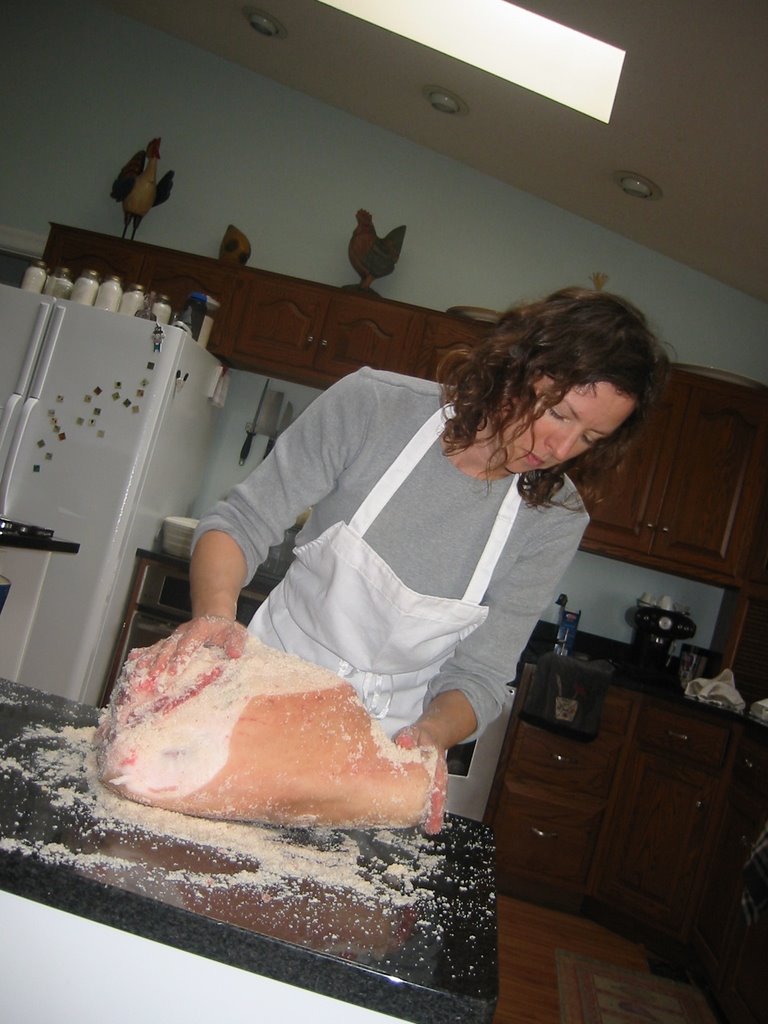
We took our pigs into the butcher on Monday, April 9th, which was quite an adventure. I picked the meat up Wednesday and began the dry-cure process on Thursday. Tamworth's are known as the "bacon pig," and by the looks of this bacon belly, I can see why. I just hope it tastes as good as it looks!

For the cure, I used a mixture of salt and brown sugar, intentionally leaving out the nitrates. Raising our own meat in order to have as natural a product as possible, and then injecting it with a bunch of nitrates/ nitrites just made no sense. Our butcher offers a city cure, a common mass production method in which a liquid salt/ nitrate brine is injected directly into the meat. Yuk! So, I began to investigate other possibilities. I couldn't find any local smoke houses, so unless we built our own smokehouse, which may happen some day, that wasn't an option. Having grown up with Virginia ham and biscuits, a dry salt cure was the obvious choice, and I sure appreciated Contrary Goddess's recent post on salt curing, which made it seem all the more doable for little ol' me.

I rubbed the salt/ sugar mixture into the hams and the bacon slabs, which I cut into manageable sizes for eating and storing. Since we butchered our pigs in April, being from a fall litter rather than a spring litter, we're curing in the bottom of our second fridge instead of using the traditional method of letting Mother Nature provide the appropriate temps—and considering the extended warm weather we enjoyed early this season and the current extended cold, we may have needed the fridge no matter what! I didn't weigh out the hams or the belly, but we probably have close to 80lbs of meat curing. The pigs were 458 live weight, but we didn't get a hanging weight on them. Because we got so many roasts, we ended up with just 15lbs of sausage from the two of them combined, which I mixed up on Friday and vacuum sealed in small packages of loose ground. Before I sealed it, though, I fried up a small patty to check the taste—mmmmmm! It sure was good, and I can't wait to try some of our salty bacon!

Sunday, April 08, 2007

Happy Birthday Babies!

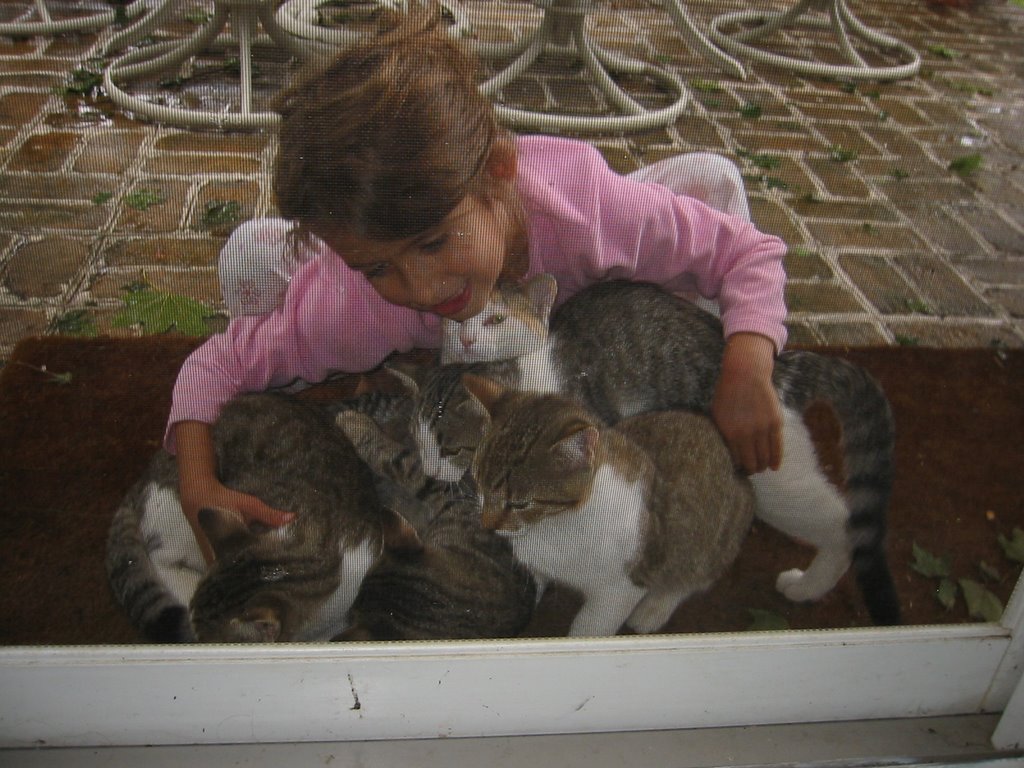
A year ago last week, we began our adventure of falling in love with a litter of kittens. Delivered by a stray cat who'd adopted our next door neighbors, they quickly became our responsibility when the mama had to be put down. The experience of hand raising these babies not only cured me of any left-over baby lust I had, but also turned out to be one of the best experiences the kids and I could have enjoyed. These kittens have graced our lives in so many ways.

We fell in love with each and every kitten, and each one is still so incredibly friendly. Our babies come running when we call, wrap themselves around our legs, climb in our laps, leap down from the loft when we least expect it, and heap up in one great big lump of purr when it's feeding time.

Hand-raised barn cats are way better than the typical feral barn cat fare found on most farms. They're no slouchers when it comes to catching rodents, averaging at least one "present" per day. The barn is, best we can tell, completely rodent free, the credit for which goes entirely to the babies. When they were only a couple months old, the mice were beginning to take over, evidenced by the fact that I easily caught two mice in a feed bag one morning which I promptly gave to my babies for play and training. They bring down whole rabbits, mice, voles, moles and shrews, and thankfully get very few birds since the rodents keep them busy enough. I wouldn't trade my babies for anything—they're fuzzy and loving and way better than any traps or chemicals could be!

**editing to add that they have all been spade and neutered and are up-to-date on their shots.

Saturday, March 17, 2007

On the hardiness of cold frames

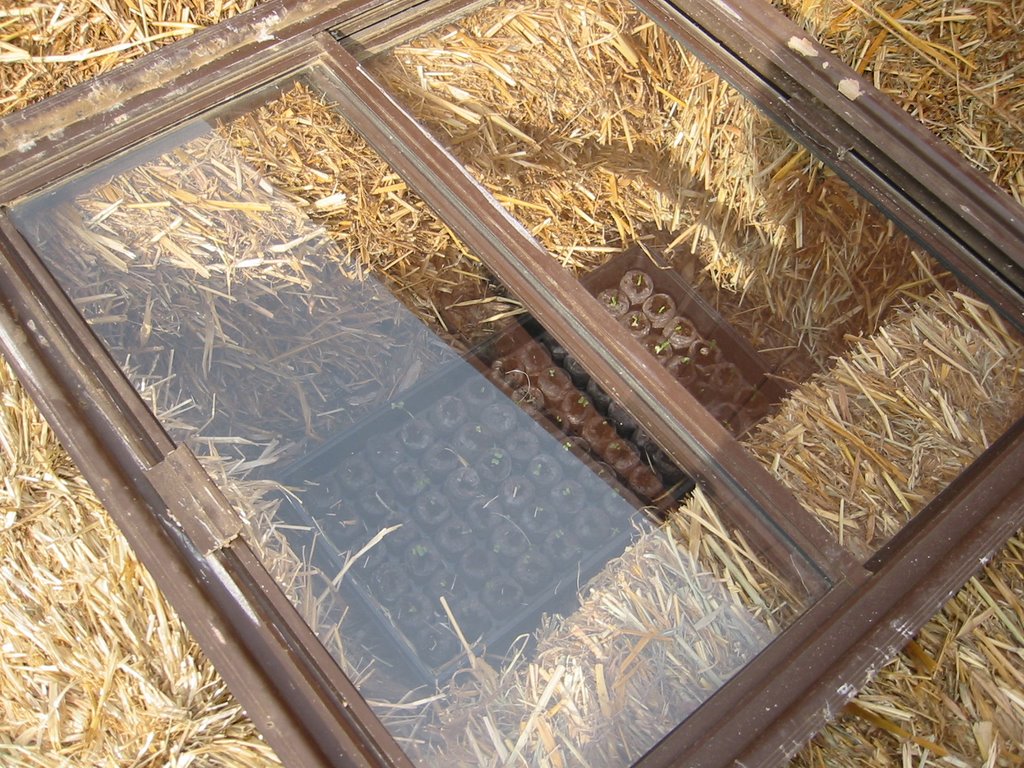
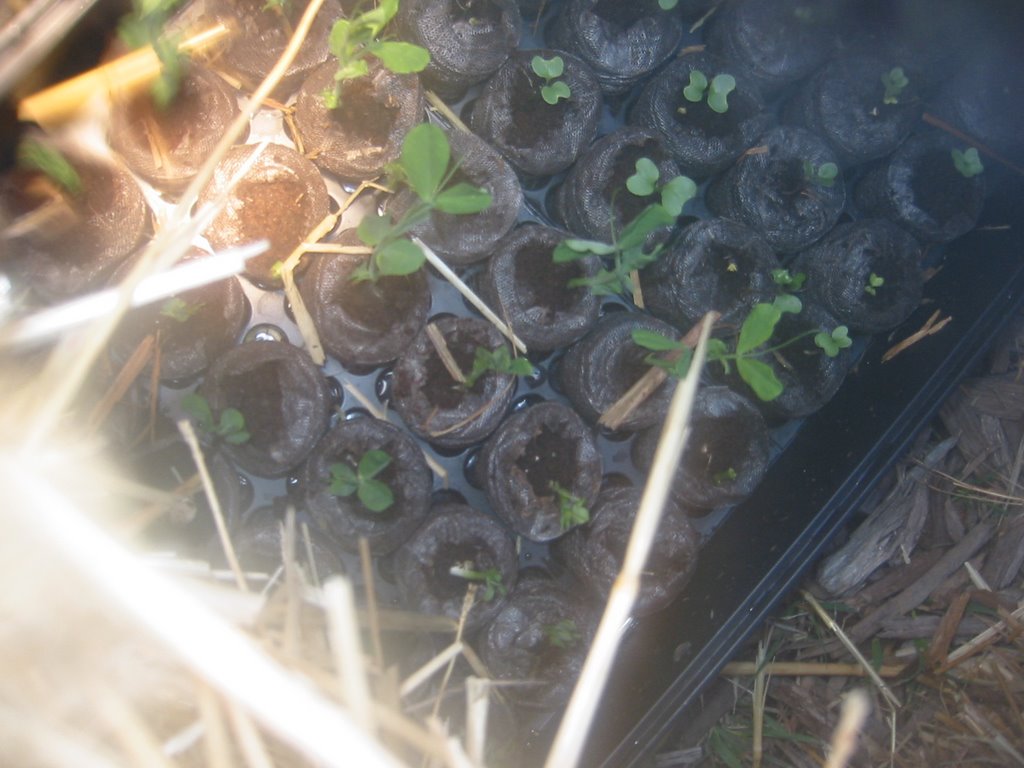
We started seeds on the 4th, letting them germinate in our kitchen window and moving them out to a strawbale coldframe shortly after. I find it's easier to use the sun's light and the straw's warmth than to try to replicate those conditions inside. I think it helps prevent legginess and to make hardening off easier. So, we tossed together 4 bales of straw and threw a window we removed from the barn when we built the coop on top to create a quick and easy coldframe. We were planning to have several long old Victorian style windows from my father-in-law as he's been replacing all their old windows at the beach house. Imagine my shock and dismay when he told me he'd put all those beautiful windows out by the curb for trash pick up!

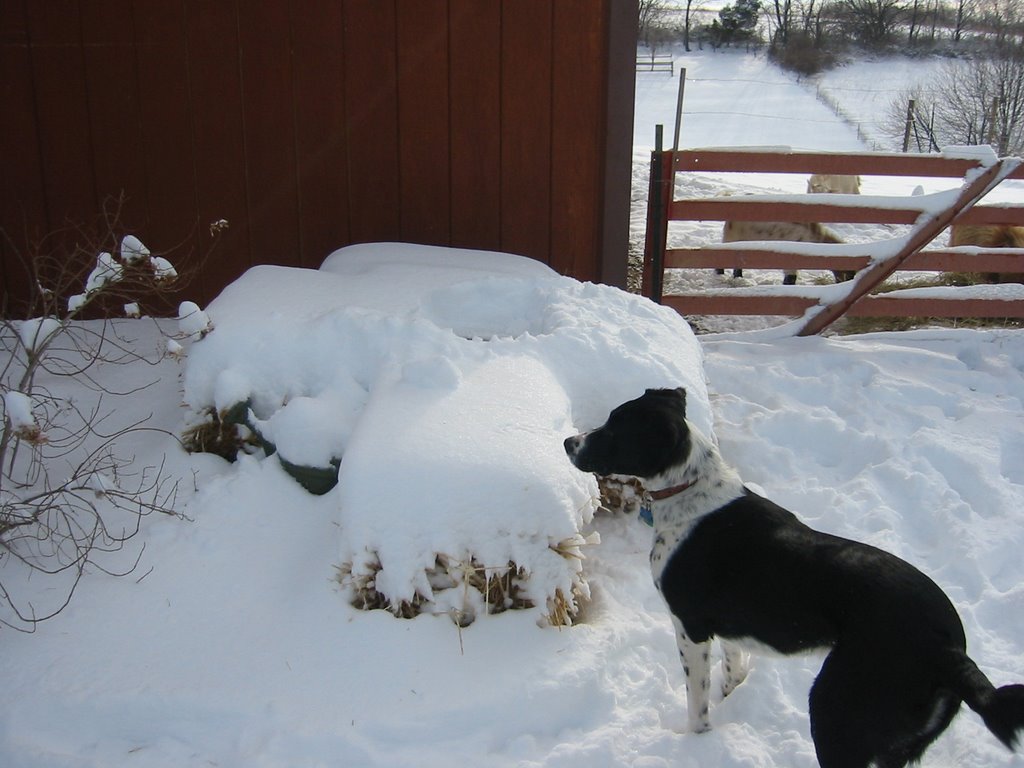
To the right is the coldframe this morning after 6 inches of snow and temperatures in the 20s. I was hopeful, but not confident as I went out to check on them this morning before feeding and watering the animals. Here are the seedlings as happy and warm as can be!

You can see peas and broccoli raab poking their heads toward the sun. I'll probably shovel some snow back on top this evening to help insulate through the night, as our temps are supposed to drop again. My biggest concern was the fluctuation, as we enjoyed temps in the 70s last week. Thankfully, the earth was nice and warm, which probably helped these little guys weather the storm in their nice cozy straw house. Those three little pigs gave straw a bad name!

Wednesday, March 07, 2007

What do you get when you cross a human with a grain of rice?

No, really, it's not a joke, and there's no punch line—unless of course, one finds humor in the exploitation of the sick, the tired, the poor, the hungry, the teeming masses, well...you get it, I'm sure.

The first genetically modified food to contain human genes has been developed by the California-based Ventria Bioscience company and is set to be approved for commercial production, as the USDA has approved preliminary production in Kansas. Researchers have managed to create a rice that produces some of the proteins found in human saliva, tears and breast milk, touting the creation as boon to treating children with diarrhea, a major killer in developing nations. Indeed, a recent company-sponsored study in Peru conveniently found that children with severe diarrhea recovered a day and a half faster if the fluids prescribed were spiked with the same proteins engineered into the rice.

According to a recent article in the British Daily Mail by Sean Poulter, "The rice is a major step in so-called Frankenstein Foods, the first mingling of human-origin genes and those from plants. But the U.S. Department of Agriculture has already signalled it plans to allow commercial cultivation."

Not to be outdone, Japanese researchers are developing rice with human genes that act as protection against agricultural herbicides by enabling the plant to break down harmful chemicals applied to soils.

Read more:
Washington Post
Daily News
Independent Science Panel
Live Science
Science News Online